

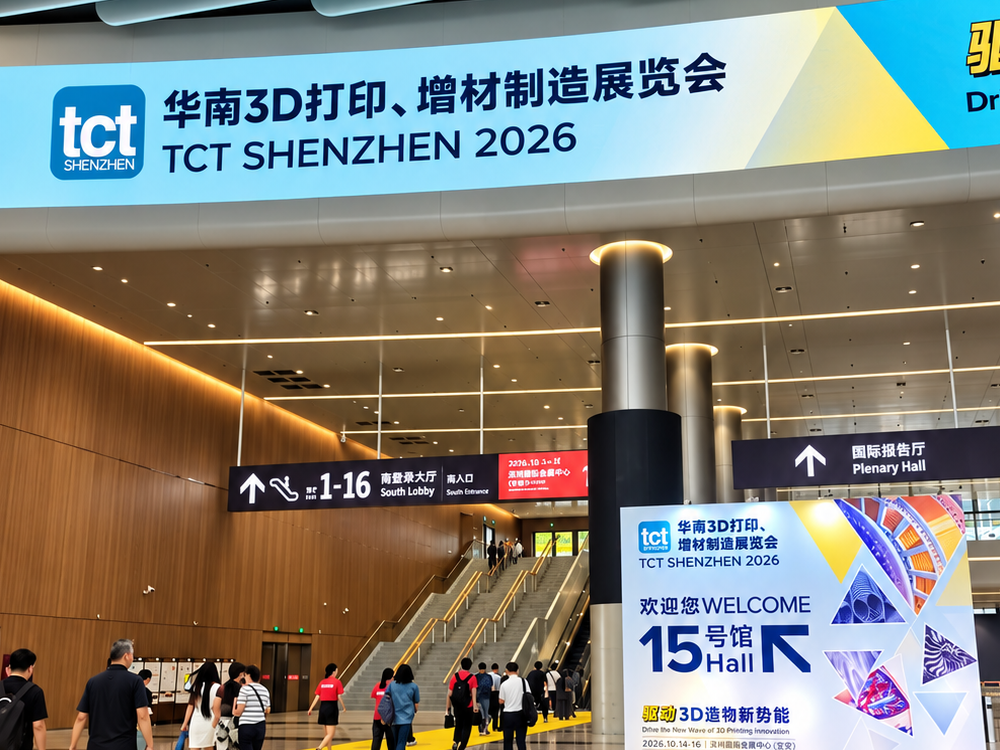
TCT SHENZHEN 2026 took place from October 14–16 in Hall 15 of the Shenzhen World Exhibition & Convention Center in Bao’an. We brought together equipment manufacturers, materials suppliers, software developers, and end-use application companies to showcase advances across the additive manufacturing (AM) value chain.
On October 19, international AM publication 3DPrint.com published an on-site report by Xu Fanglei, highlighting seven developments in metal printing, application-specific materials, ceramic processes, industrial components, footwear, AI-driven design, and desktop manufacturing. Drawing on that coverage and what we presented at this year's event, we have selected several examples that deserve closer attention.
Across the show floor, we saw exhibitors placing greater emphasis on the relationship between production technology and the parts it can manufacture. For end users, machine specifications alone are not enough: manufacturing workflows, part performance, production repeatability, and economic viability all matter.
In the metal AM area, we observed two parallel directions: industrial systems are being optimized for specific materials and processing requirements, while smaller machines are seeking to reduce the space and operational barriers associated with metal 3D printing.
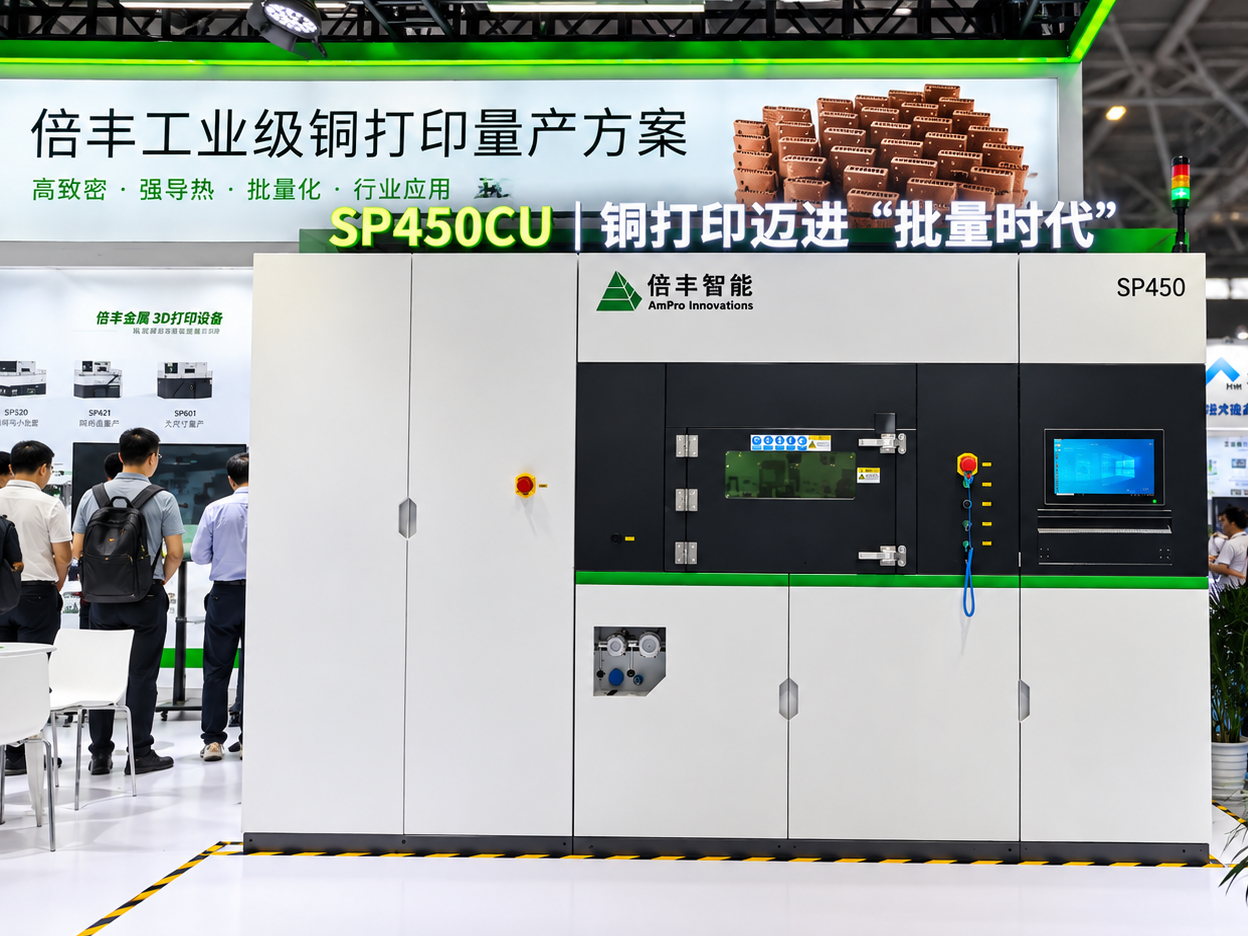
At its booth, AmPro presented the SP450CU copper printing solution, bringing together a dedicated system, copper powders, and printed components for applications such as heat dissipation and complex flow channels. When processing highly reflective metals, production capability must be judged not only by machine specifications, but also by process stability, part consistency, post-processing, and the economics of batch production.
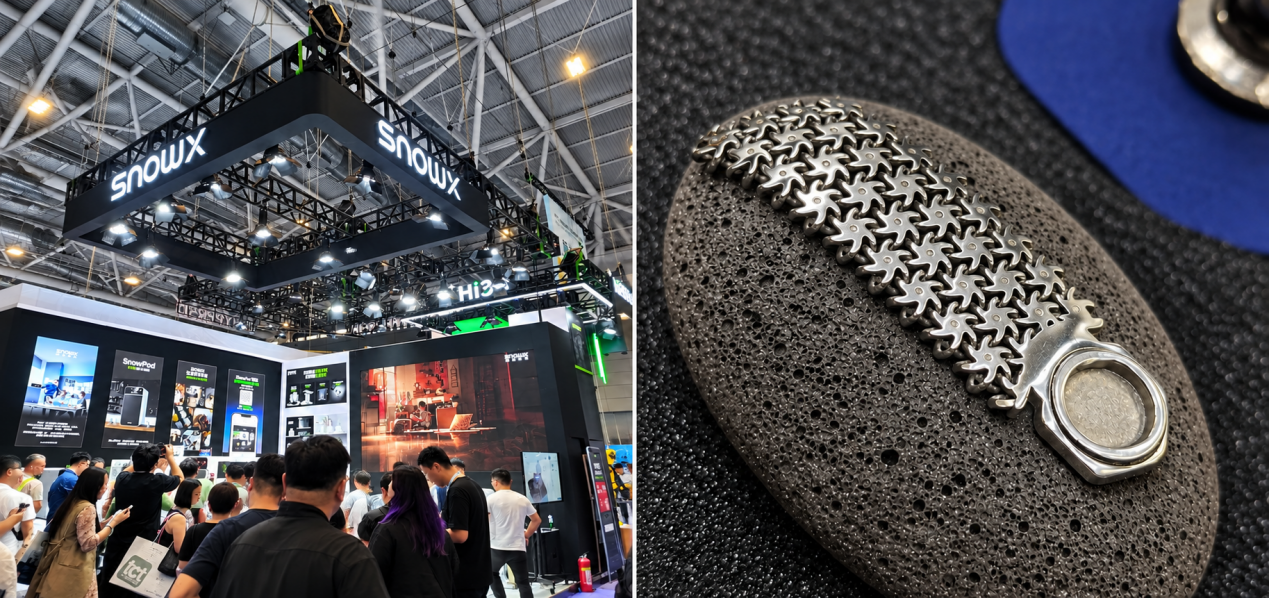
SnowX presented a different approach with its SnowPod desktop metal 3D printer. According to booth signage, the company was preparing a crowdfunding launch. Such systems could make metal AM more accessible in smaller workspaces, although their commercial viability remains to be demonstrated in real-world use.
Together, these exhibits showed us how metal AM is advancing toward both highly specialized industrial production and more compact, integrated systems intended for a broader user base.
The materials area showed a clear application-oriented focus. AmPro displayed copper powders ranging from pure copper for infrared laser printing and high-thermal-conductivity copper to high-purity copper and alloys such as CuCrNb and CuSnNi. CNPC POWDER presented aluminum alloys including AlSi10Mg and Scalmalloy.
Requirements for thermal conductivity, strength, ductility, lightweighting, and process compatibility differ from one part to another. Even within the same material family, achieving the required performance may call for different powder formulations and manufacturing conditions.
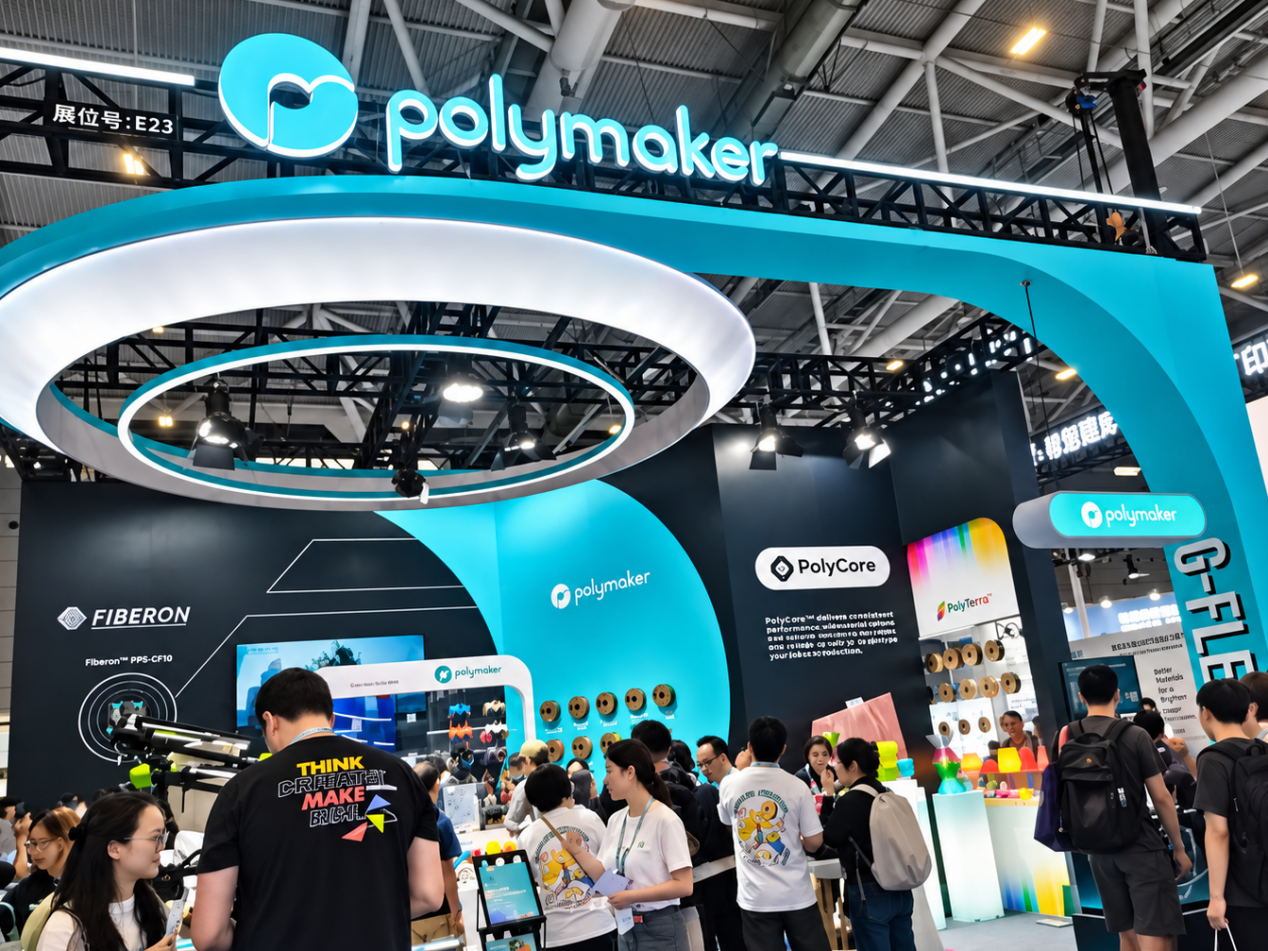
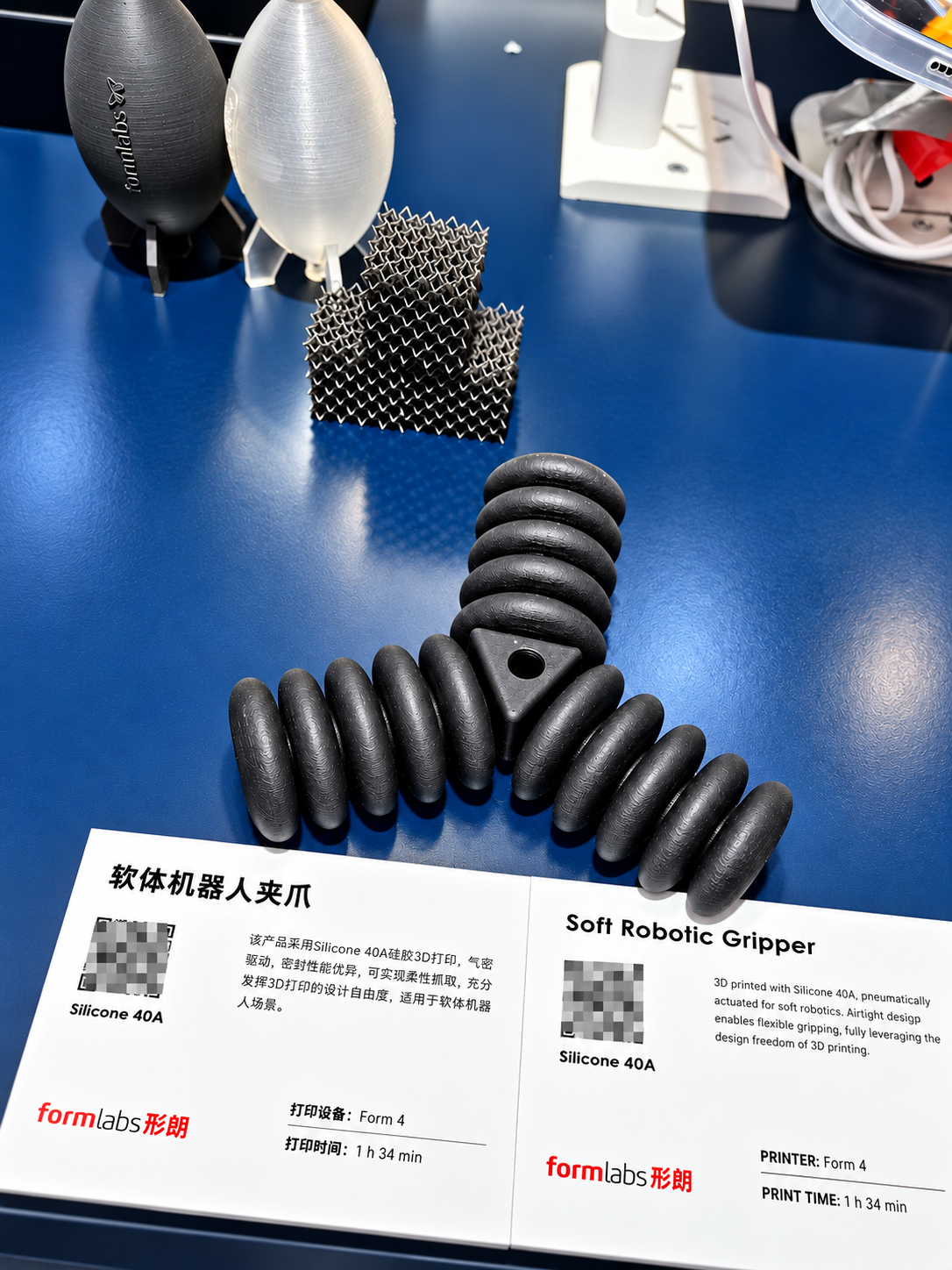
Polymer materials are becoming similarly specialized. Polymaker showcased Fiberon PA612-CF15 and ASA-CF08, alongside printed applications; FusRock presented its flexible PEBA 95A material; and Formlabs demonstrated a pneumatically actuated soft robotic gripper made with Silicone 40A Resin.
From thermal management components to soft robotics, the materials on display were not simply printing consumables. They helped determine the structure, shape, and end-use functionality of manufactured products.
Our exhibition covered a range of AM processes, including selective laser melting, electron beam processing, binder jetting, nanoparticle jetting, and vat photopolymerization. Rather than being direct substitutes for one another, these processes address different materials, geometries, and production requirements.
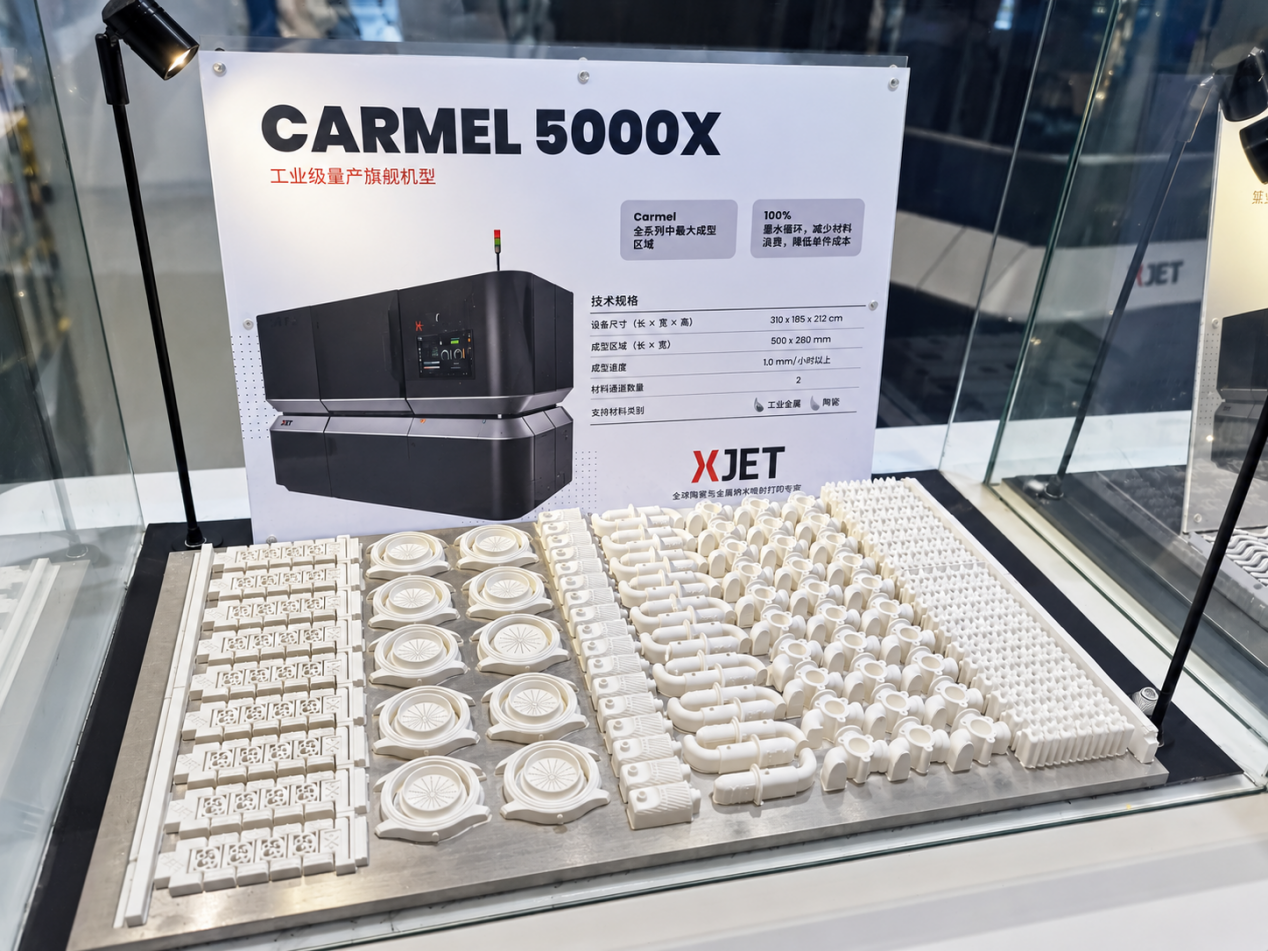
XJet showcased solutions based on the Carmel 5000X, together with precision ceramic parts and metal accessories. According to the manufacturer's specifications, the system offers a 500 × 280 mm build area and a layer thickness of 7–10 microns. Its NanoParticle Jetting technology provides an additional route for producing complex parts with fine features.
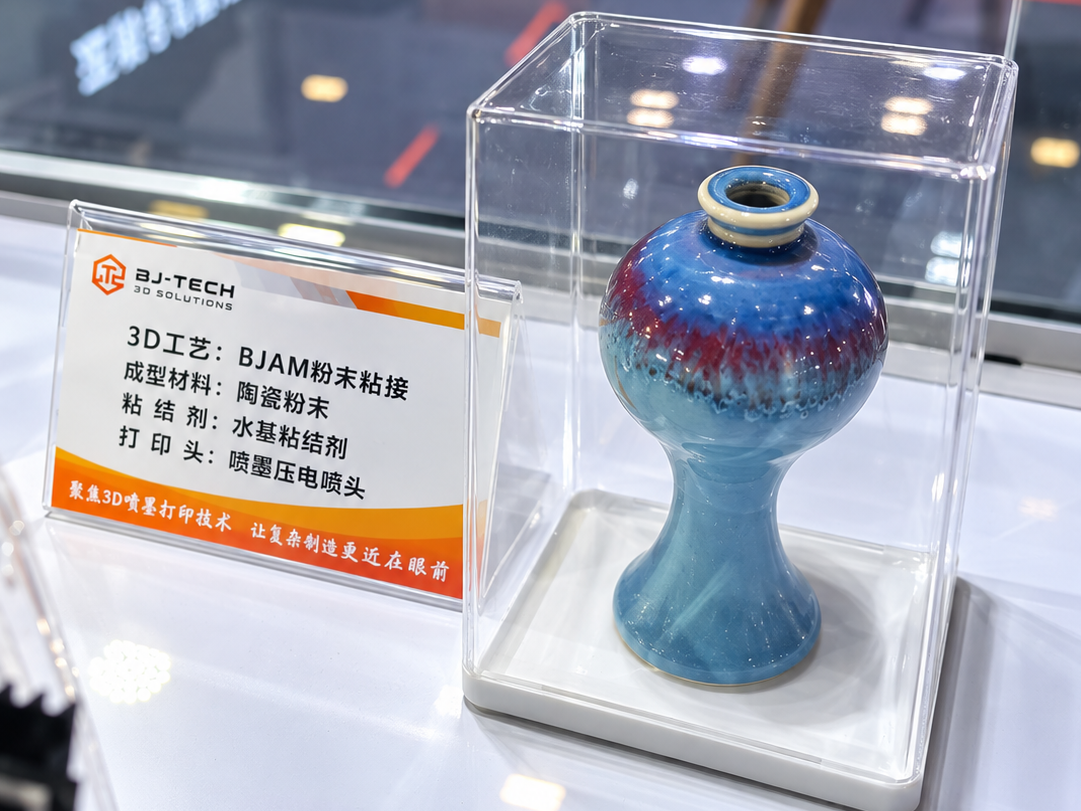
A ceramic vase and technical materials at the BJ-TECH booth illustrated powder bonding and binder jetting applications. DEW also presented binder jetting technologies. In each case, alignment between equipment, materials, and sintering processes is critical to achieving the desired final properties.
When comparing production routes for fine structures, ceramic components, and small complex metal parts, we believe manufacturers should assess minimum feature size, surface quality, sintering shrinkage, support removal, and total cost together.
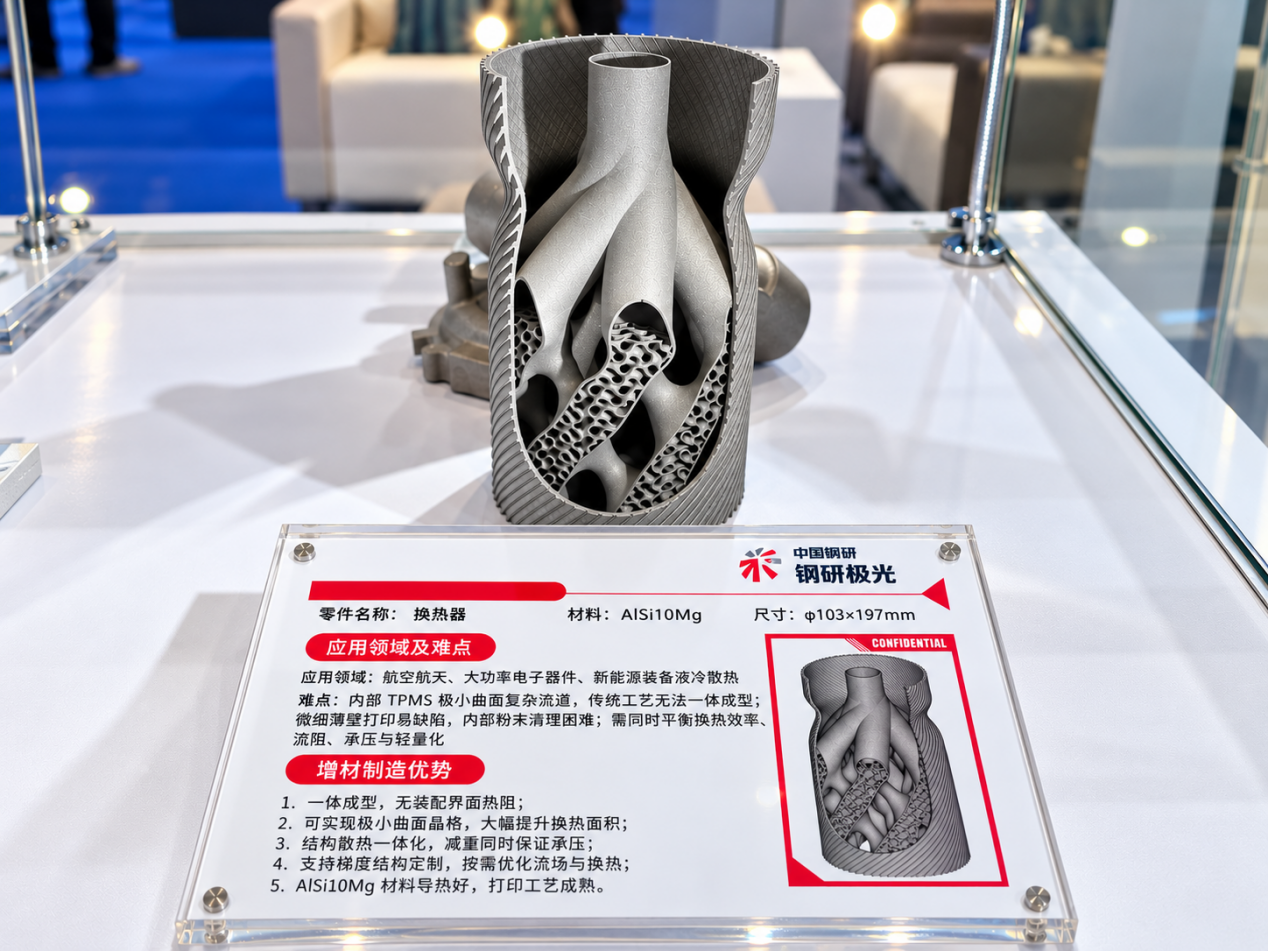
We saw several metal AM applications designed to address specific challenges in thermal management and complex-part manufacturing. ADDIREEN presented pure-copper components for optical modules and copper-alloy lattice structures, while G-Light displayed an AlSi10Mg heat exchanger featuring an internal triply periodic minimal surface (TPMS) structure.
For thermal management components, heat-transfer performance must be balanced against flow resistance, pressure resistance, residual powder removal, and manufacturing cost. Our conference program also explored high-performance copper alloys, TPMS structures, and liquid-cooling products.
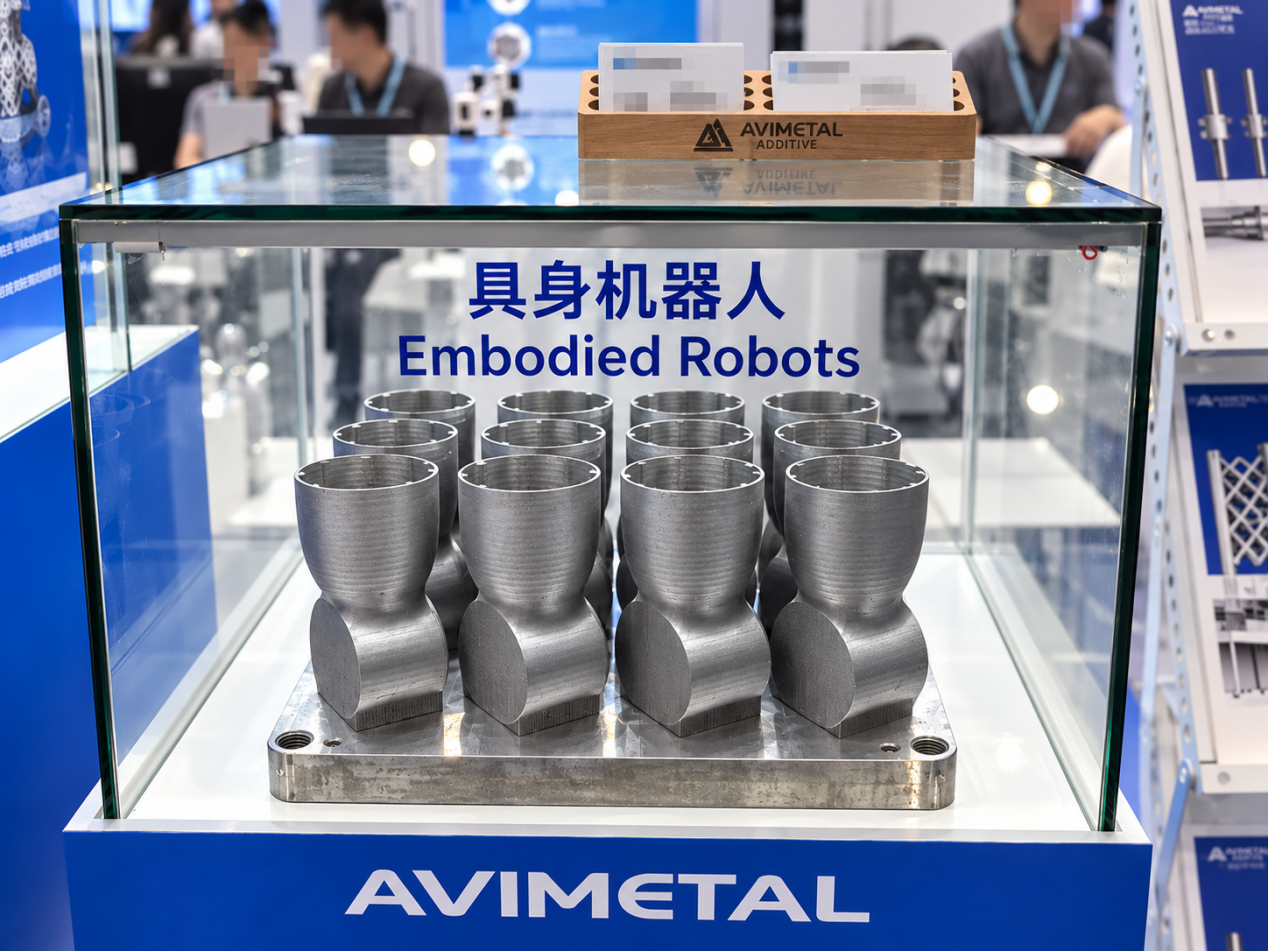
In consumer electronics and robotics, AmPro displayed smartwatch frames labeled as TC4 titanium alloy, along with structural parts for humanoid robots. AVIMETAL AM featured applications in embodied robotics and consumer electronics. Lightweighting, one-piece fabrication of complex structures, and design freedom are opening up new options for product developers.
These displays illustrated practical potential, while also reminding us that moving from prototypes to sustained production requires assembly validation, performance testing, repeatability control, and careful cost evaluation.
Footwear and other flexible products provided some of the exhibition's most tangible end-use examples. Himalaya, Inely Tech, YIDIMU, and Douchuan 3D displayed footwear designs, flexible products, and related equipment. Douchuan 3D also featured its DC4588 DLP system for digital footwear manufacturing.
Himalaya displayed footwear printed as a single piece under its NATUYA brand. Carbon demonstrated applications of lattice cushioning structures in athletic shoe midsoles, bicycle saddles, helmets, and backpack suspension systems—products worn close to the body or used in sports.
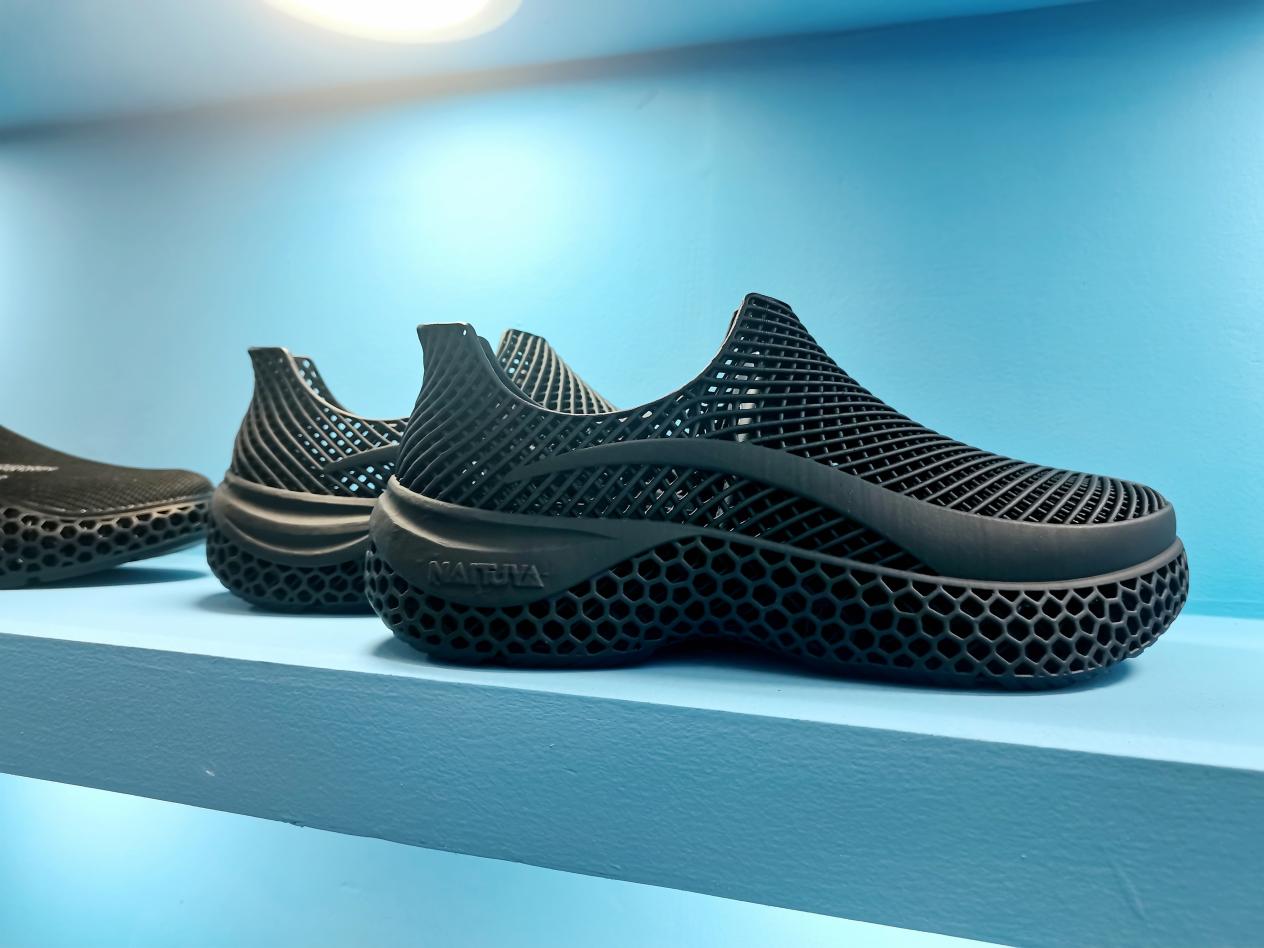
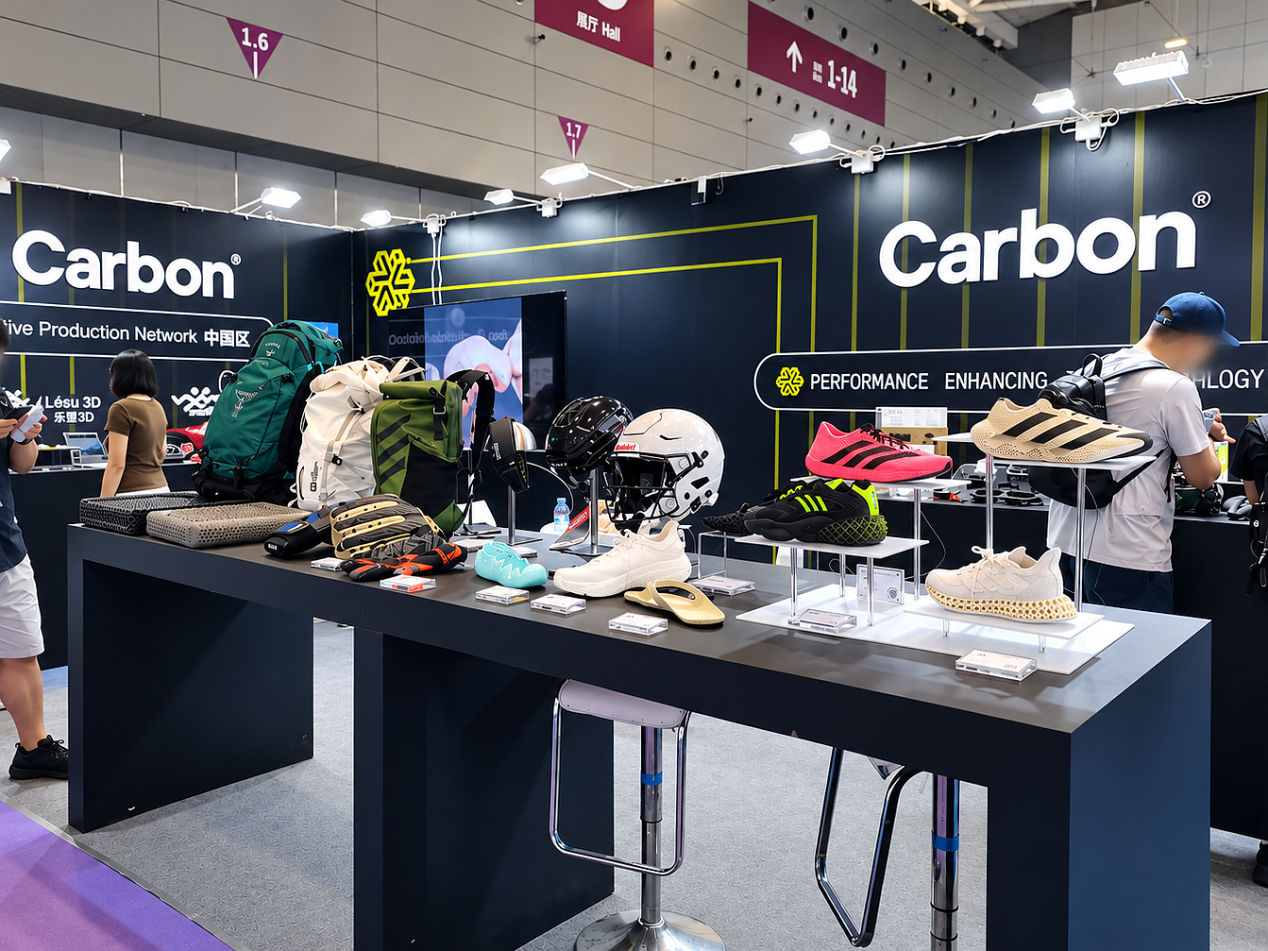
Even with the same material, designers can vary lattice cell size, density, and regional distribution to achieve different cushioning and support characteristics. Foot scanning systems at the show further linked body-measurement capture with the demand for personalized footwear.
Together, scanning, design, materials, printing, and post-processing are forming a more complete footwear production workflow. Comfort, durability, cleaning, delivery efficiency, and retail price remain important considerations as these products seek broader consumer adoption.
Tools showcased by Meshy, Hyper3D, Hi3D, V2Fun, and N4D made AI-generated 3D content an important topic at this year's show. Some demonstrations went beyond visual model generation to emphasize editability and integration with downstream manufacturing workflows.
V2Fun presented AI-powered tools for creating 3D models and textures. N4D's Coala solution combined conversational generation, CAD parameter adjustments, and file export in a single workflow, making it easier to revise designs after the initial concept stage.
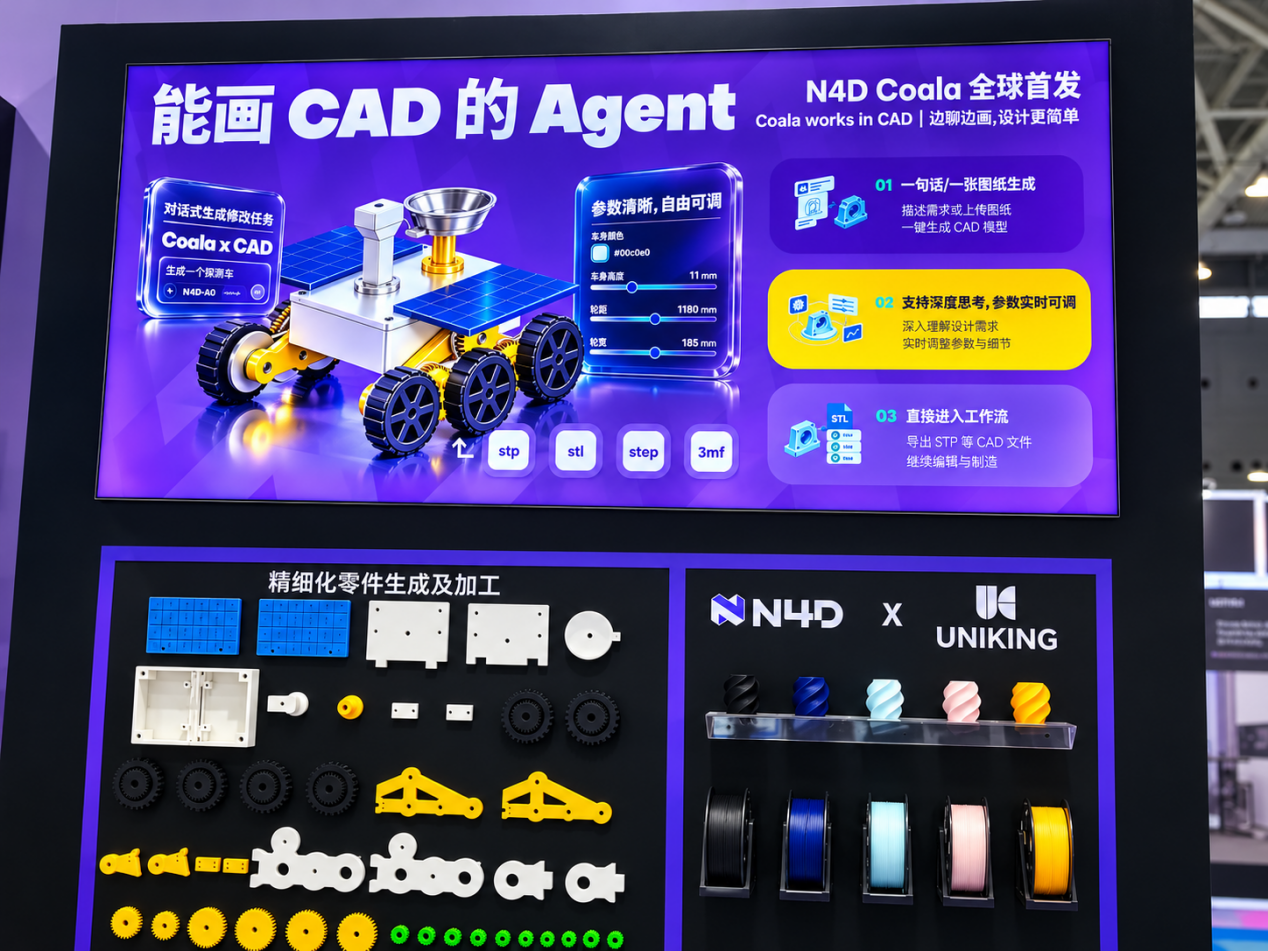
Software presentations from FLOW-3D and Yunrong Zhisuan, together with live 3D scanning demonstrations, also highlighted the need to connect data capture, modeling, simulation, and pre-manufacturing validation.
For engineering parts, wall thickness, tolerances, loads, and process constraints still require professional verification. For consumer applications, model repair, color separation, and slicing-software compatibility directly affect output quality. We see the next opportunity for AI design tools in turning concepts into usable manufacturing data.
From rich colors and transparent finishes to distinctive surface textures and finished lighting products, the desktop manufacturing area showed another side of 3D printing: the technology supports product design and visual expression as well as industrial parts.
Decorative objects, lighting pieces, and multicolor prints at booths including Polymaker's highlighted silk finishes, gradients, transparency, and surface effects. For designers and small studios, material choice is becoming a meaningful way to differentiate products.
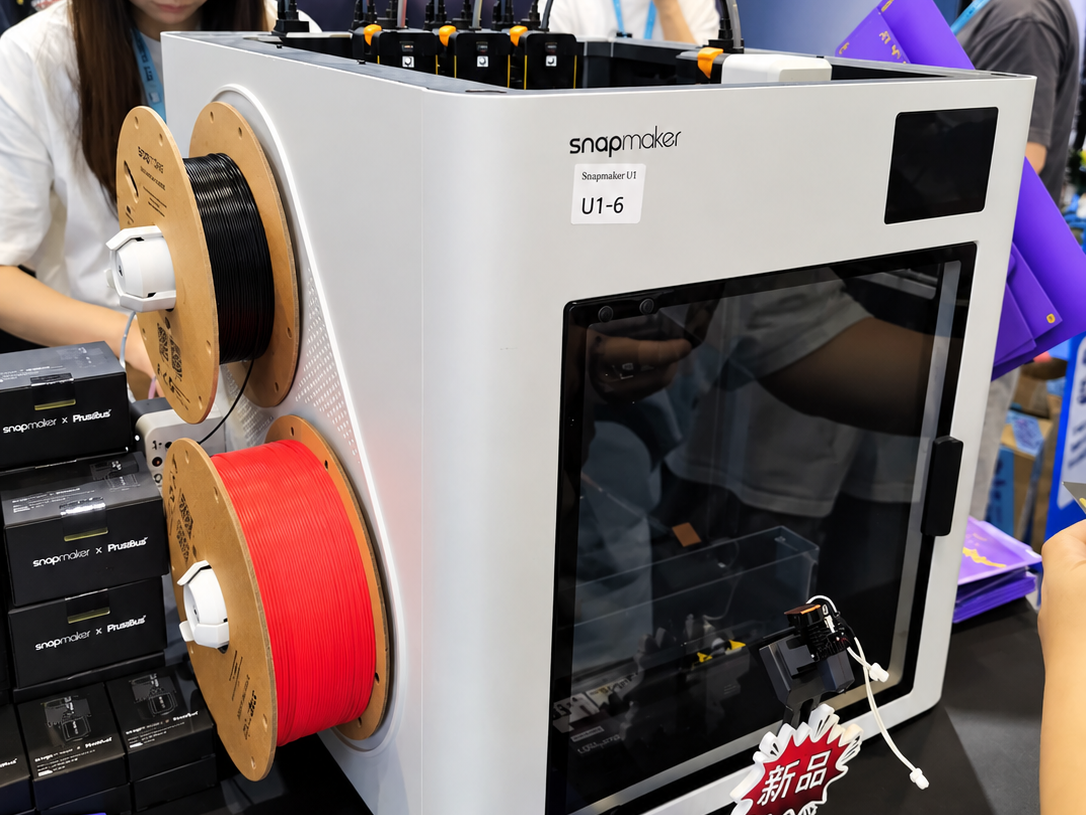
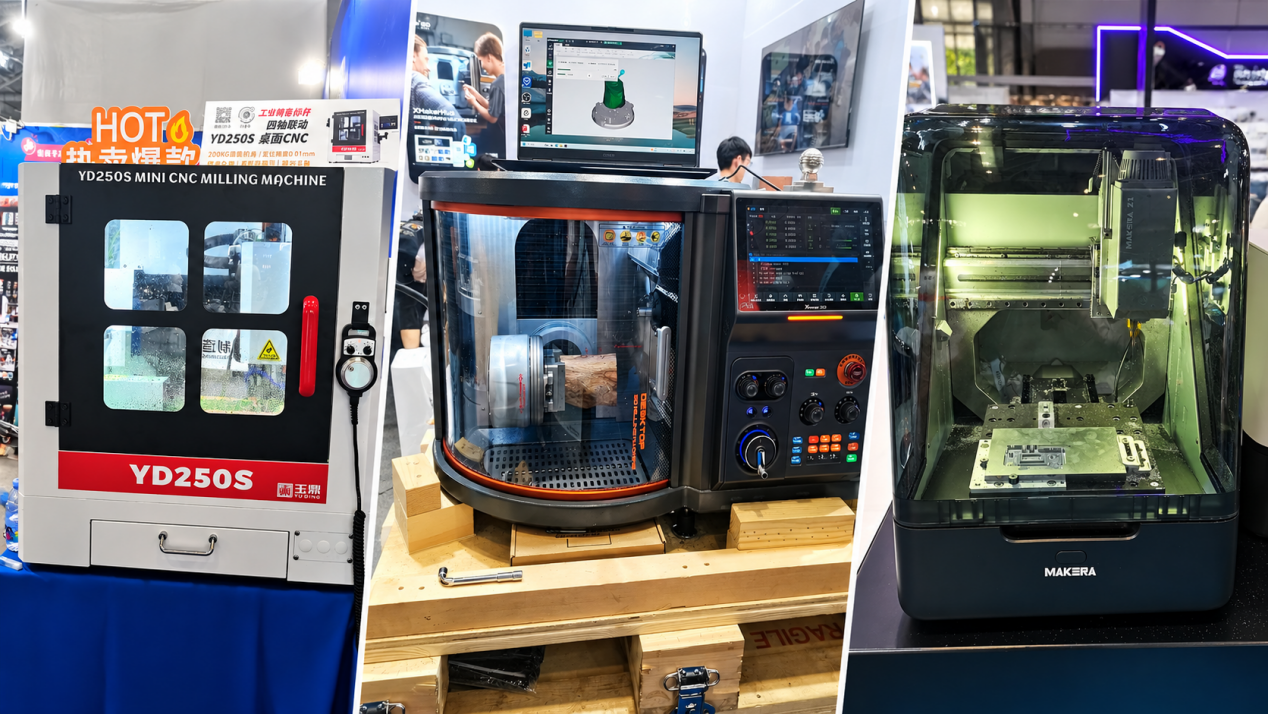
Snapmaker and Phaetus presented the Liber U1 high-flow hotend solution. Visitors also saw the Snapmaker U1 multicolor 3D printer, alongside texture printing, desktop CNC machines, and laser engraving equipment. Used together, these tools support model making, surface decoration, precision machining, and personalized fabrication within compact workspaces.
For individuals and small businesses, material compatibility, ease of use, and finished-product quality are becoming just as important as equipment specifications.
Looking back at TCT SHENZHEN 2026, the applications we showcased ranged from copper thermal management components and structural parts for robotics and consumer electronics to flexible footwear and AI-powered digital tools connecting design with manufacturing. Each example addressed the same fundamental question: what practical value can additive manufacturing deliver for a specific product?
The journey from demonstrator to reliable commercial production still depends on performance, quality consistency, cost, and genuine market demand. We will continue creating opportunities for equipment, materials, software, and application companies to connect and collaborate, bringing promising technologies closer to real manufacturing needs.
For more exhibition updates and the latest news on 3D printing, visit the official TCT website.
Editorial note: This exhibition insight has been prepared by the TCT SHENZHEN organizing team, drawing on our event information and on-site reporting by Xu Fanglei, published by 3DPrint.com on October 19, 2026.
Photo credits: Photographs from the referenced media report are courtesy of Xu Fanglei.







TCT Asia